How To Maintain Pool Pumps And Filters For Maximum Efficiency
If your pool water has started looking a little dull, or your pump seems to be working harder than usual, the culprit is often something straightforward, such as a filter that needs cleaning, a basket full of debris, or a component that's been running past its service interval. For pool owners, the pump and filter system is the engine room of the whole setup, and keeping it in good working order is what separates a pool that's always ready to use from one that constantly needs attention. For anyone sourcing equipment or advice from a pool shop on the Gold Coast, understanding the basics of pump and filter maintenance is well worth the time before something goes wrong.
Maintaining these systems doesn't require specialist knowledge, but it does require consistency. Knowing what to check, how often to check it and when to call in a professional or replace a part makes a genuine difference to running costs, water quality and the lifespan of your equipment. This article covers the key areas, from day-to-day cleaning tasks through to knowing when a component has reached the end of its useful life.
Why Your Pool Pump Is the One Piece of Equipment You Can't Afford to Neglect
A pool pump that's properly maintained runs more efficiently, consumes less electricity and lasts considerably longer than one that's left to manage on its own. Most pumps are designed to run for many years, but that lifespan is contingent on regular attention like clearing the strainer basket, checking for unusual noise or vibration and making sure the pump is neither undersized nor oversized for the volume of water it's managing.
The pump circulates water through the filtration system, keeping it clean, chemically balanced and free of stagnant pockets where algae and bacteria thrive. When it runs inefficiently due to a blocked impeller, worn bearings or a seal beginning to fail, the entire pool suffers. Water clarity drops, chemical treatments become less effective and energy consumption climbs without any corresponding improvement in performance. A pump working too hard against a blocked system is one of the more common causes of premature motor failure, and it's almost entirely avoidable with routine upkeep.
How Often Should You Actually Be Cleaning Your Pool Filter?
Filter cleaning frequency depends on the type of filter your pool uses, how heavily the pool is used and the surrounding environment. For example, a pool near trees or in a high-dust area will need more frequent attention than one in a sheltered setting. Letting a filter go too long between cleans forces the pump to work against increased resistance, reducing flow rate and adding strain to the motor.
Key cleaning intervals to keep in mind:
- Sand filters — backwash every one to four weeks, or when pressure rises noticeably above baseline
- Cartridge filters — rinse every two to six weeks, deep-clean with a filter cleaning solution every three to six months
- DE filters — backwash when pressure climbs approximately 70 kPa above the clean reading and recharge with fresh DE powder after each backwash
Having the right pool supplies on the Gold Coast readily available makes it easier to stay on schedule rather than letting maintenance slip.
The Strainer Basket: Small Component, Significant Impact
Checking and emptying the strainer basket should be part of a weekly pool maintenance routine. It takes less than five minutes and prevents a disproportionate amount of wear on the pump motor. The basket sits upstream of the impeller and catches larger debris like leaves, insects and hair before it reaches the filter. A basket that's full to capacity restricts water flow into the pump, which reduces suction, increases motor workload and in some cases causes the pump to run dry if the restriction is severe enough.
When inspecting the basket, also check the O-ring on the strainer lid. A dry or damaged O-ring allows air into the system, which reduces priming efficiency and can cause the pump to lose suction intermittently. A light coating of silicon lubricant keeps the O-ring pliable and extends its life. Replacement baskets and O-rings are standard stock items and inexpensive to replace when worn.
Sand Filter Media Doesn't Last Forever — Here's When to Replace It
Sand filters work by passing water through a bed of specially graded filter sand, which traps fine particles as the water moves through. Over time, that sand breaks down into smaller particles, compacts and loses its ability to trap debris effectively. Most pool professionals recommend replacing filter sand every five to seven years, though pools with heavy bather loads or significant debris input may need it sooner. Because the decline in sand media performance is gradual, it's easy to miss until water quality has already dropped noticeably.
Signs that the sand in your filter may be due for replacement include:
- Pool water that remains cloudy or dull despite correct chemical balance and regular backwashing
- Fine debris or particles visible in the pool after the filter has been running
- Sand appearing in the pool, which may indicate a cracked lateral inside the filter tank
- Channelling in the sand bed, where water finds a path of least resistance rather than filtering evenly
When replacing filter sand, using the correct grade — typically 0.45 to 0.55 mm — ensures the filter performs as intended. Quality filter sand is available from any good
pool shop on the Gold Coast, where staff can confirm the right grade and quantity for your specific filter model.
Running Your Pump at the Right Times Reduces Costs Without Cutting Corners
Pool pumps don't need to run continuously to maintain water quality. For most residential pools, running the pump for six to eight hours per day is sufficient to turn the water over the recommended number of times, keep the filtration system working effectively and circulate chemical treatments. Scheduling that run time during off-peak electricity hours can reduce energy costs without any impact on water quality.
A few scheduling considerations worth factoring in:
- Run the pump during off-peak electricity tariff periods where possible — check with your energy provider for your specific peak and off-peak windows
- Schedule at least part of the pump run during daylight hours if you have a solar heating system, to circulate water through the solar panels while they're generating heat
- Increase run time during periods of heavy pool use, high temperatures or after storms, when the filtration system has more work to do
- Consider a variable speed pump, which can run at lower speeds for longer periods at significantly reduced energy consumption compared to a fixed-speed motor
What Unusual Noises From Your Pump Are Actually Telling You
A pool pump in good working order runs with a consistent, relatively quiet hum. Any deviation from that, like grinding, screeching, rattling or a change in the pitch of the motor, is worth investigating promptly, because most pump noises indicate a mechanical issue that will worsen if left unaddressed.
Matching the noise to its likely cause helps narrow down the fix:
- Grinding or gurgling — typically cavitation caused by restricted water flow into the pump; check the strainer basket, skimmer baskets and all suction-side valves
- High-pitched screeching — often indicates worn or failing motor bearings; continuing to run the pump risks further motor damage
- Rattling — can point to loose fittings, a foreign object in the impeller housing or vibration from an improperly mounted pump
- Air bubbling from the return jets — suggests an air leak on the suction side, commonly at the pump lid O-ring, unions or suction pipe joints
Catching these issues early almost always means a simpler and less costly repair. A reputable supplier of pool supplies on the Gold Coast can help source replacement parts or refer you to a qualified technician when the repair goes beyond a straightforward fix.
Cartridge Filters Need More Than a Rinse to Stay Effective
Rinsing a cartridge filter with a garden hose removes surface debris and restores flow, but it doesn't remove the oils, sunscreens, fine organic particles and mineral deposits that accumulate within the pleats of the filter medium over time. A filter carrying that kind of build-up can have flow restriction even after a rinse, and over time the accumulated contaminants begin to degrade the filter fabric itself. A proper deep clean using a dedicated cartridge filter cleaning solution dissolves these deposits and restores the filter to something approaching its original condition.
The process involves more than a quick spray:
- Remove the cartridge and rinse off loose debris with a garden hose, working from top to bottom between the pleats
- Soak the cartridge overnight in a diluted filter cleaning solution, which breaks down oils, scale and fine organic matter that rinsing alone won't shift
- Rinse thoroughly after soaking to remove all cleaning solution before reinstalling
- Inspect the cartridge fabric for tears, collapsed pleats or end cap damage — any of these indicate the cartridge should be replaced rather than returned to service
- Allow the cartridge to dry fully if a spare is available, as alternating between two cartridges extends the life of both
Knowing When Repair Is No Longer the Right Answer
Pool equipment has a finite service life, and there comes a point where ongoing repairs cost more in parts, time and energy consumption than a replacement would. For pool pumps, that point is often reached when the motor has required multiple repairs within a short period, when energy consumption has climbed noticeably without a clear cause or when the pump is simply too old to source parts for reliably. Filters reach end-of-life when the tank shows signs of structural fatigue, when the internal components have degraded beyond effective cleaning or when repeated repairs to laterals, manifolds or seals have added up.
The clearest signs that replacement is worth considering over further repair:
- Repair costs in the past twelve months have reached or exceeded half the cost of a comparable new unit
- Energy bills have increased without a corresponding change in usage patterns, suggesting declining motor efficiency
- Parts for the existing model are difficult to source or no longer available
- The equipment is more than ten to fifteen years old and showing consistent performance issues
- A new installation would allow for a meaningful upgrade — such as moving from a single-speed to a variable speed pump — that delivers ongoing running cost savings
Get the Right Advice and Supplies From Dazzling Blue Pool and Spa Shop
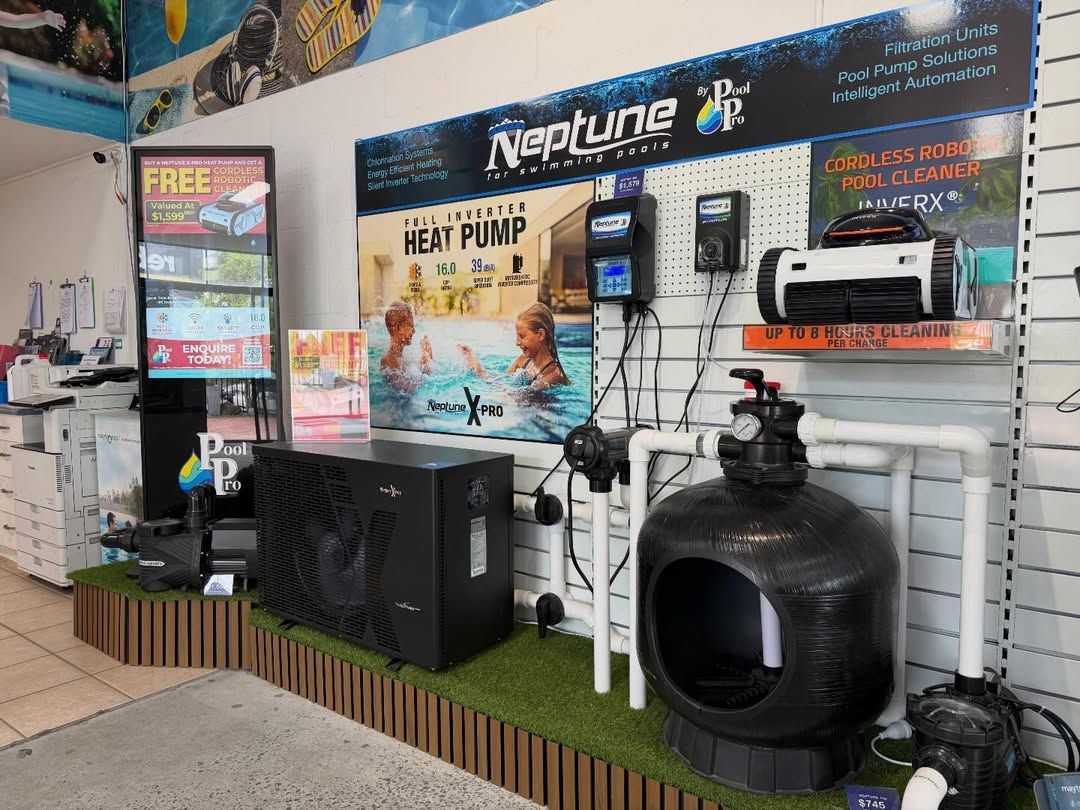
At Dazzling Blue Pool & Spa Shop, we work with Gold Coast pool owners to keep their systems running efficiently all year round. The Gold Coast climate is ideal for pool ownership, but it also means pools are in use for a longer season than most other parts of the country. This places more demand on pumps, filters and the equipment that keeps water clean and safe. Whether you need replacement filter media, a new cartridge, pump parts or guidance on whether your equipment is worth repairing or due for an upgrade, our team can point you in the right direction. We stock a broad range of pool supplies and can help you find what your system actually needs, so if you're not sure about your next step, visit us in store or get in touch online today.